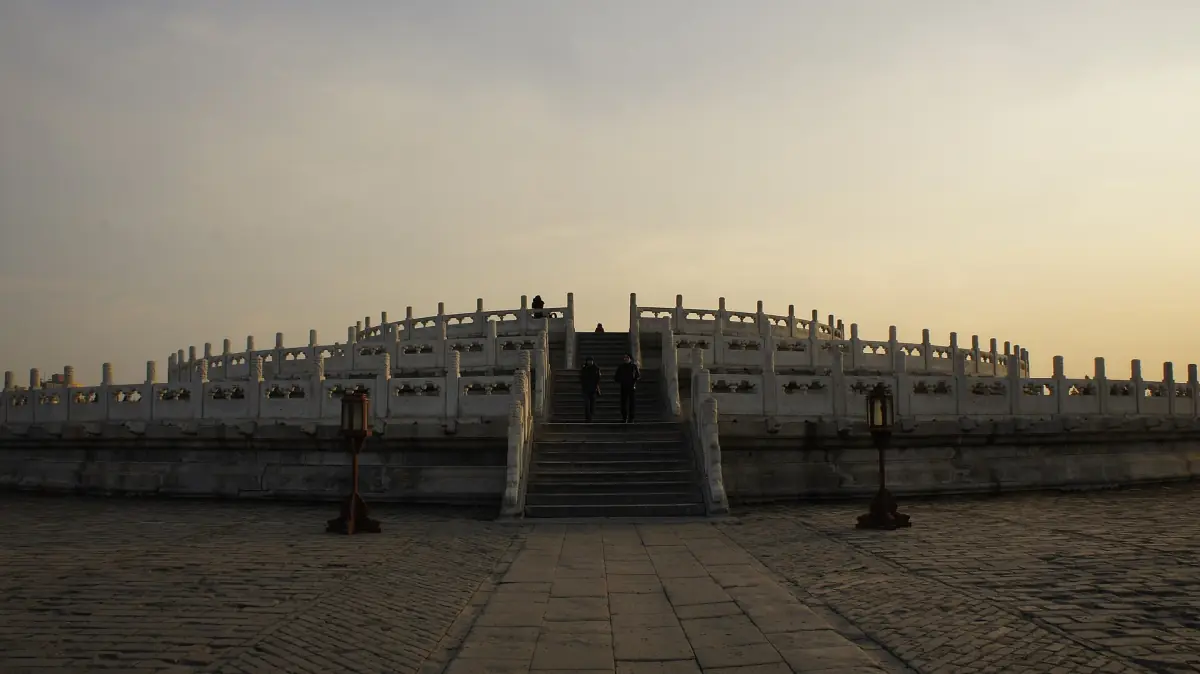
The Circular Mound Altar at a glance
The Circular Mound Altar (Huanqiu, 圜丘) lies in the southern part of the Temple of Heaven, while the Hall of Prayer for Good Harvests marks the north. It has no roof. It is a round, three-tiered platform of stone, open to the sky, because this is where the emperor made the sacrifice to Heaven at the winter solstice.
The altar was built in 1530 under the Jiajing emperor and enlarged in 1749 under Qianlong. It stands inside a square enclosure, a deliberate pairing of a round altar and a square setting. The altar belongs to the same ticketed area as the hall and the Echo Wall, so the combined ticket (CNY 34 from 1 April to 31 October, CNY 28 from 1 November to 31 March, as of 2026) covers it. Prices, reduced rates and booking with a passport are on the Temple of Heaven tickets page, and guided visits are compared under Temple of Heaven tours.
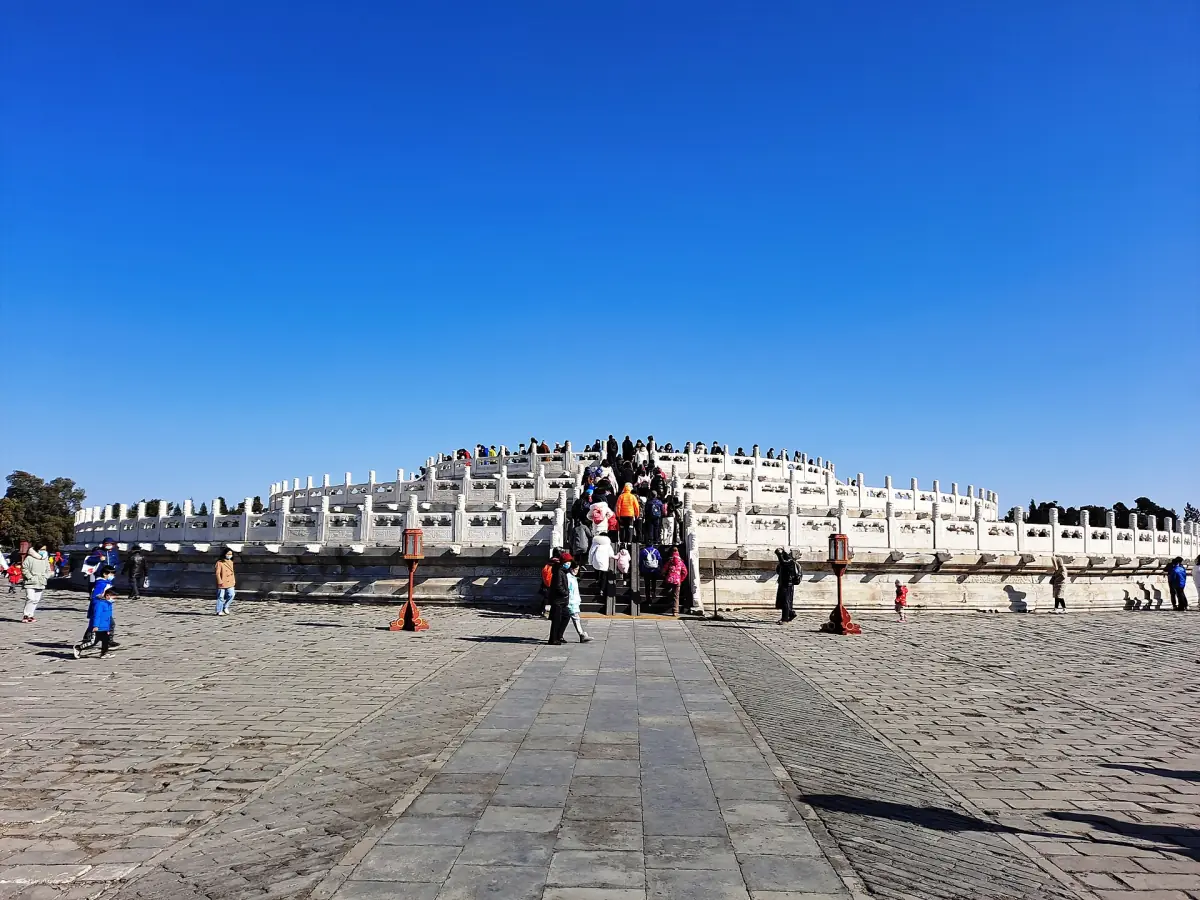
What you see on the altar
Everything on the altar is arranged to read as a statement about Heaven.
Three terraces
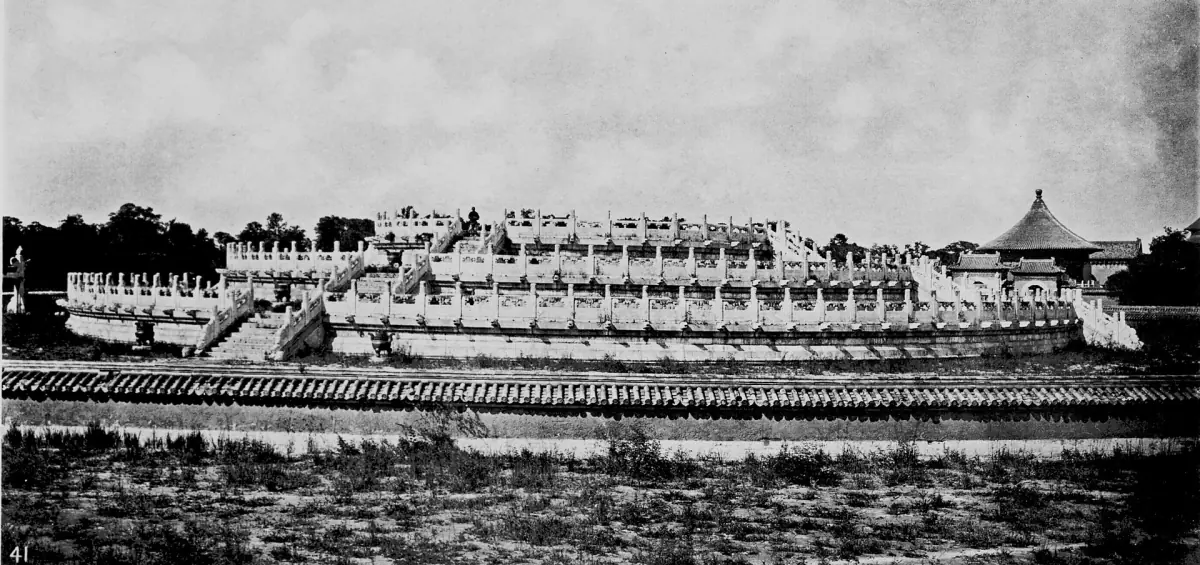
Three concentric terraces rise one above the other and get smaller towards the top. White stone balustrades run around each level.
Round in a square
The round altar sits inside a square enclosure. The pairing stands for the idea of a round Heaven over a square Earth.
Gateways
Stone gateways, known as Lingxing gates, mark the way into the enclosure and make good photo spots.
The number nine
Steps, floor stones and balustrades repeat the number nine and its multiples. Nine was the number of Heaven, and the altar is full of it.
Our pick: the rites at the altar with a guide
This programme explains what happened on the altar during the imperial ceremonies.
Hand-picked tours, booked through GetYourGuide. Prices are indicative starting prices in US dollars (as of October 2026). Tap a tour for live availability and the current price in your currency.
Temple of Heaven tours and guided visits
Guided visits that include the Circular Mound Altar and the other main buildings, with live prices and availability. Check what each option includes, in particular whether entry tickets are part of it.
The Heart Stone and the nine rings
The top terrace is paved in nine rings of stone. The innermost ring has 9 stones, and every ring outwards adds more, up to 81 stones in the outermost ring. Together the rings hold 405 stones.
At the centre lies a separate stone, the Heaven Heart Stone (Tianxin Shi). It marks the middle point of the altar and is not part of the 405. Count the rings, not the centre, if you want to check the number yourself.
| Feature | Number |
|---|---|
| Terraces | 3 |
| Stone rings on the top terrace | 9 |
| Stones in the innermost ring | 9 |
| Stones in the outermost ring | 81 |
| Ring stones in total | 405 |
| Heart Stone | 1, at the centre |
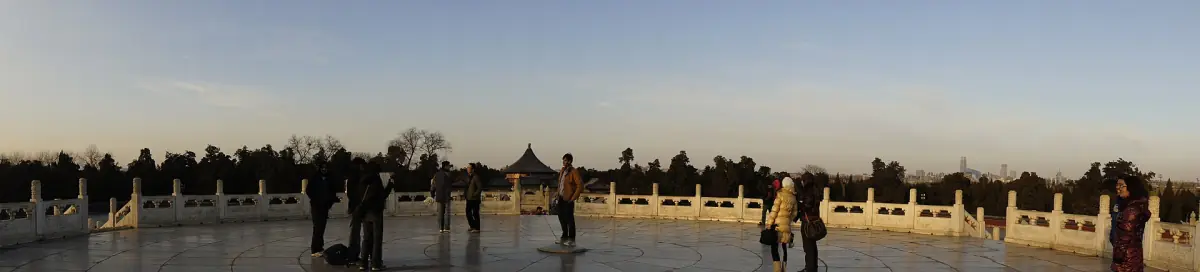
Does the Heart Stone echo?
The Heart Stone is known for strengthening the voice of the person who stands on it. On a calm moment, the speaker's voice seems louder and fuller.
Do not count on it. Crowds, wind and noise from other visitors can swallow the effect. If you want an acoustic experience that is easier to enjoy, the Echo Wall and the Triple Sound Stones work in a different way, at the Imperial Vault of Heaven. Treat the Heart Stone as a bonus when the platform is calm.
Timing helps: the monuments open at 08:00, and fewer voices around the platform give the stone a better chance.
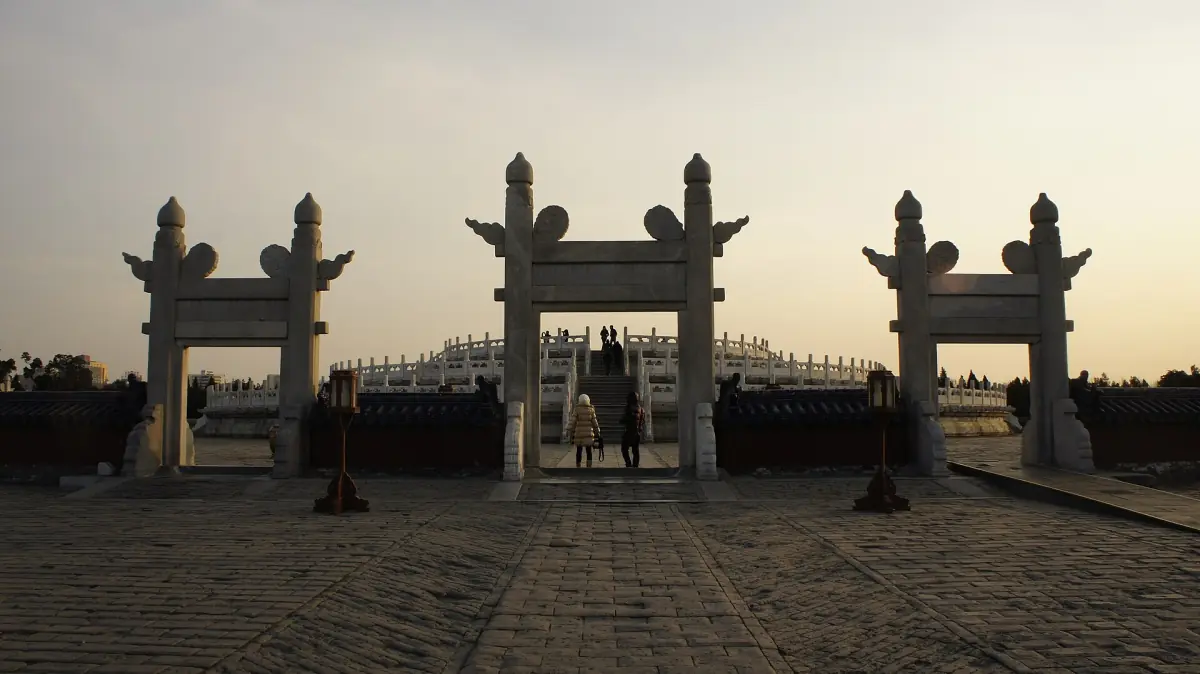
Visiting the altar
What to know when you plan the route.
Opening hours
The monuments open at 08:00. Last entry is 17:30 from 1 April to 31 October and 16:30 from 1 November to 31 March. Since 1 September 2026 the altar closes on Mondays again, except on public holidays.
Opening hours →Walk south to north
The altar is at the southern end, the hall at the northern end. Walk the line between them and you pass the Imperial Vault of Heaven and the Danbi bridge on the way.
Hall of Prayer for Good Harvests →No daily ceremony
The winter solstice rite is history. There is no regular imperial ceremony on the altar that you can book as part of a ticket, so go for the architecture, not for a performance.
Take care of the stone
The altar is a protected monument. Stay on the paths and do not write on or climb the balustrades.
The altar in the nineteenth century
A photograph by John Thomson from the 1870s shows the altar with its terraces and balustrades. Hold it against today's view from the top terrace and you can spot the same three levels.
Circular Mound Altar: frequently asked questions
What was the Circular Mound Altar used for?
For the sacrifice to Heaven at the winter solstice. The prayers for the harvest belonged to the Hall of Prayer for Good Harvests in the first lunar month, a different rite.
When was the altar built?
In 1530 under the Jiajing emperor, and it was enlarged in 1749 under the Qianlong emperor.
How many stones are in the rings?
The top terrace has nine rings, from 9 stones in the innermost ring to 81 in the outermost, 405 in total. The Heart Stone in the centre is a separate stone and not part of that count.
Do I need a separate ticket for the altar?
No. The altar is part of the same ticketed area as the hall and the Echo Wall. The combined ticket includes the park; a separate ticket for these three sights costs CNY 20 as of 2026.
Can I stand on the Heart Stone and hear an echo?
The stone is known for strengthening the voice of the speaker, but it is not guaranteed. Crowds and noise often spoil it. Go early and treat it as a bonus.
Is the altar open on Mondays?
No. Since 1 September 2026 the altar, the hall and the Echo Wall are closed on Mondays again, except on public holidays.