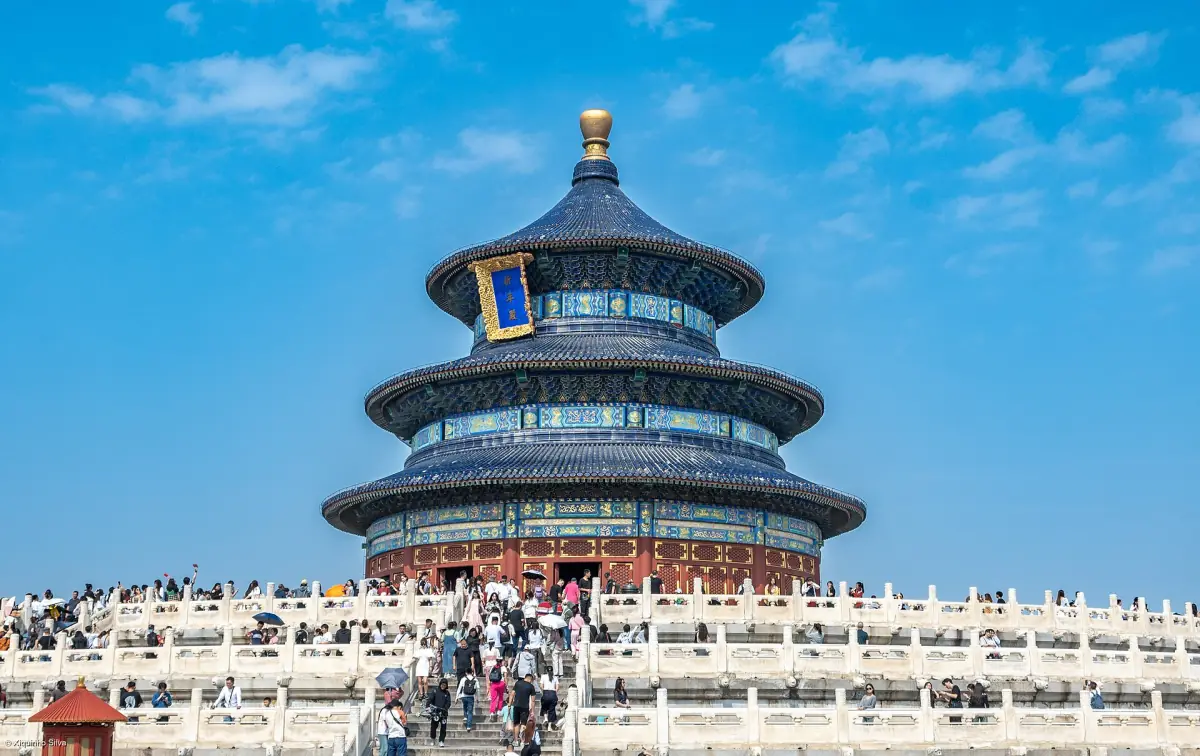
Round heaven, square earth
The Temple of Heaven (Tiantan) was built as an altar complex, not as a palace. Emperors of the Ming and Qing dynasties came here to make offerings to heaven and to pray for good harvests. Every part of the site follows that purpose, and the layout works like a diagram of the old idea that heaven is round and earth is square.
You can read it on the map. The northern end of the complex is rounded, the southern end is rectangular, and the main ritual buildings are round structures set inside rectangular enclosures. The layout also ties the order of heaven and earth to the emperor's role as the link between them. It is symbolism, not a statement about the shape of the planet.
Despite the name, this is not a Buddhist temple. The design belongs to Confucian ritual and music culture, with ideas of yin and yang and the five elements in the background. If you want the symbolism explained on site, look at the Temple of Heaven guided tours. For prices and booking, see the Temple of Heaven tickets page.
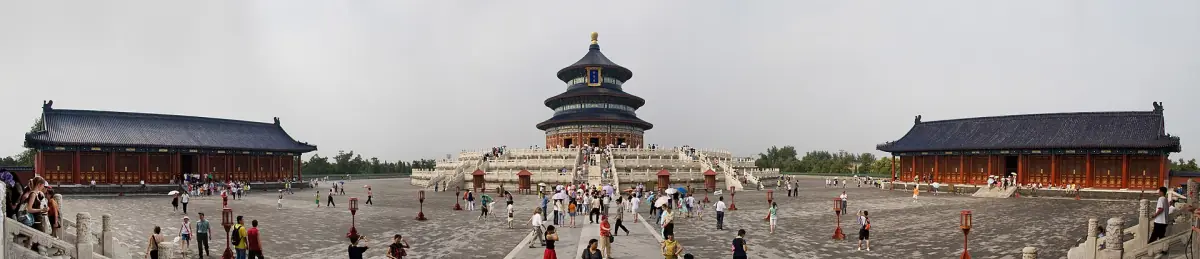
How to read the layout on site
Three ideas explain most of what you see.
Two walls, two zones
Two enclosure walls divide an outer and an inner area. The prayer buildings stand in the north, the Circular Mound Altar in the south. The rounded north wall and the straight southern wall carry the round-and-square idea at the scale of the whole park.
Round inside square
The altar is a round platform within a square enclosure. The Imperial Vault stands in a circular courtyard. Look for this pairing at each stop: a round form for heaven, a straight frame for earth.
A raised axis
The Danbi Bridge is a brick and stone platform, 360 m long, that rises from south to north between the Imperial Vault and the Hall of Prayer. Despite its name it does not cross a river. It is a ceremonial walkway that lifts you gently toward the prayer hall.
Our pick: a private guide for the buildings
A private guide has time to explain the round halls and the Hall of Abstinence.
Hand-picked tours, booked through GetYourGuide. Prices are indicative starting prices in US dollars (as of October 2026). Tap a tour for live availability and the current price in your currency.
Temple of Heaven tours and day trips
Guided visits to the Temple of Heaven and Beijing city tours that include it, with live prices and availability.
The Hall of Prayer: roofs, columns and color
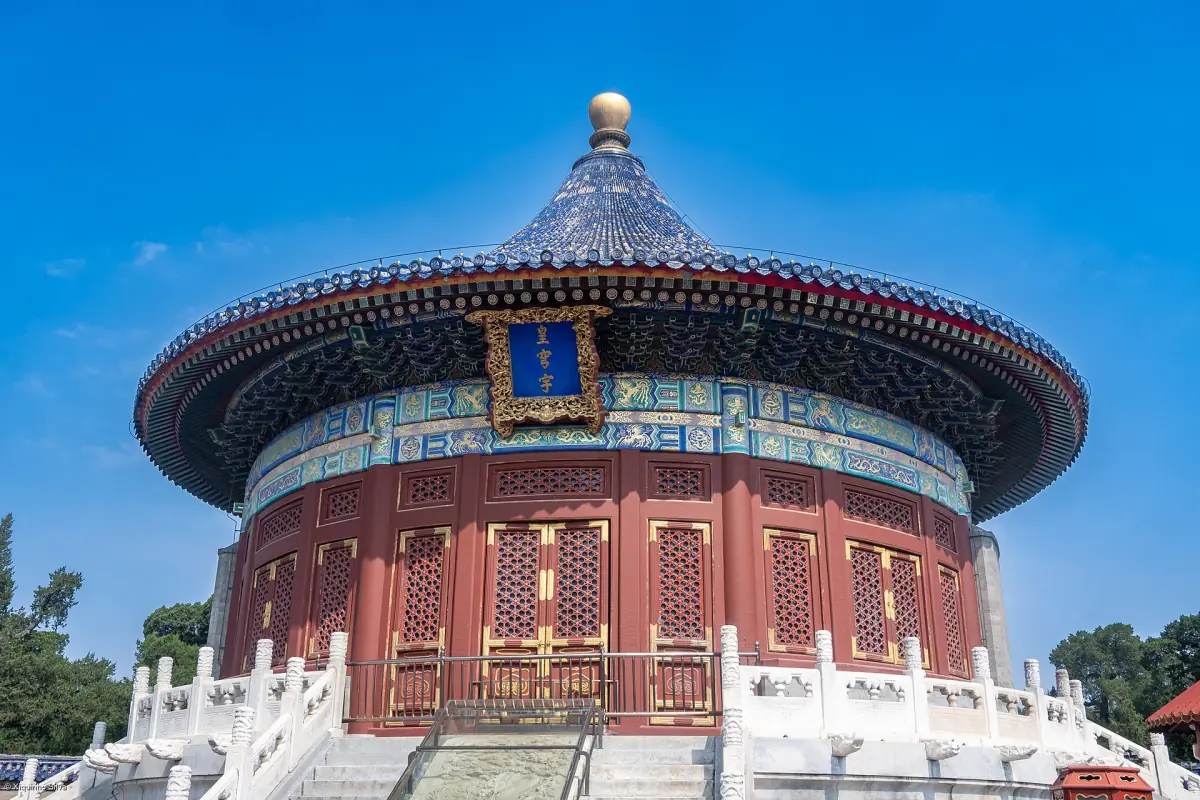
The Hall of Prayer for Good Harvests (Qiniandian) is the building on every postcard. It began in 1420 as a rectangular hall for offerings to heaven and earth. In 1545 it became a round building with a triple roof. In 1751 all the roof tiles were made blue and the hall received its present name. Before that the three roofs were blue, yellow and green from top to bottom.
The blue tiles and the round shape stand for the sky. The hall is roughly 38 m high, and about 24 m wide between the outer eave columns. Other figures appear for the height depending on what is measured, so treat these as rough values. A lightning fire destroyed the hall in 1889, and the rebuilding was completed in 1896. Later repairs followed, so the timber you see is not original Ming wood.
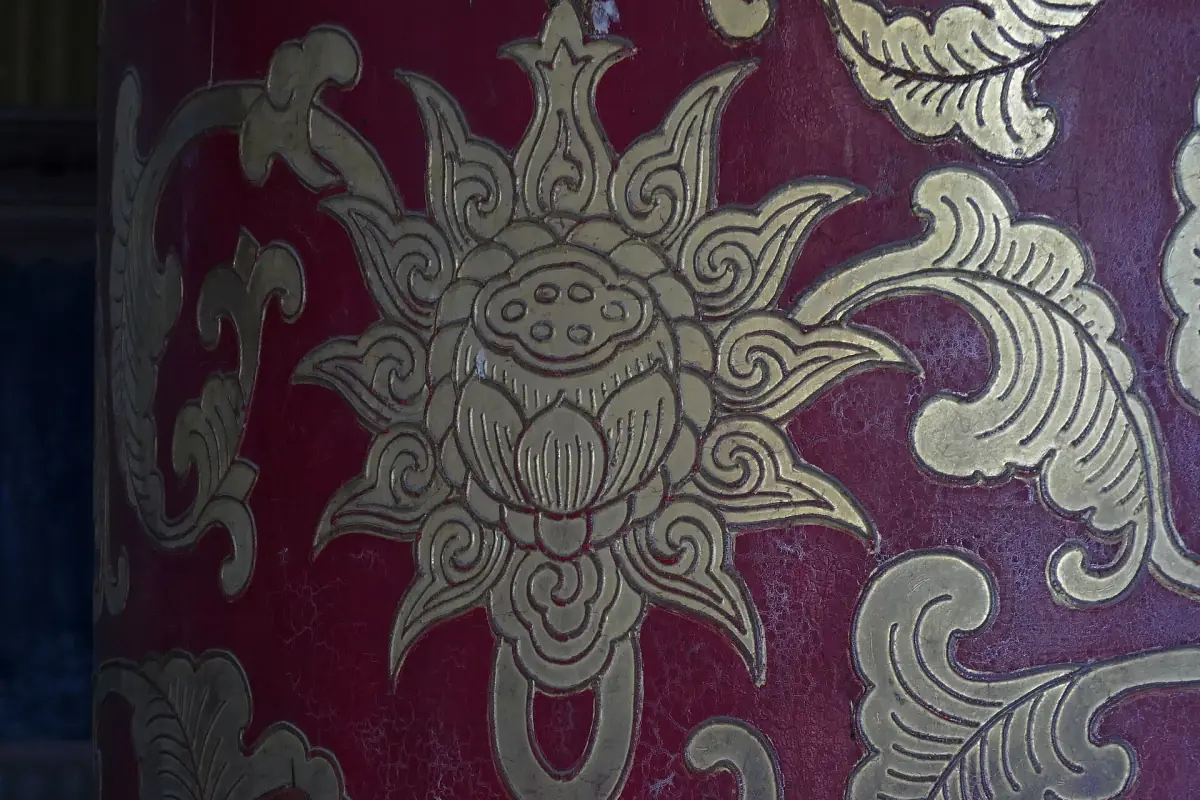
The 28 columns carry the calendar. The four central columns stand for the seasons. Twelve columns stand for the months and twelve for the traditional double hours. The two rings of twelve add up to 24, matching the solar terms, and all 28 are also linked with the 28 star stations. More on the hall and its courtyard is on the Hall of Prayer page.
The Circular Mound Altar: the language of nine
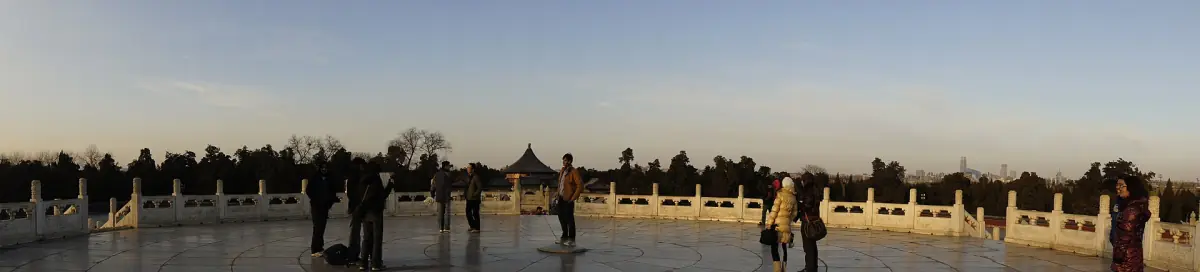
The altar was built in 1530 under the Jiajing emperor and enlarged in 1749. It has three concentric terraces that get smaller toward the top, with white stone balustrades. Nine is the number of heaven, so nine and its multiples repeat in steps, paving stones and balustrades.
On the top terrace there are nine rings of stone. The innermost ring has 9 stones and the outermost 81, which makes 405 ring stones in total, not counting the central Heart Stone. Standing on the Heart Stone and speaking is said to make your voice sound stronger. That depends on noise and crowds, so do not plan around it. Details are on the Circular Mound Altar page.
Imperial Vault, Echo Wall and the Fasting Palace
The Imperial Vault of Heaven (Huangqiongyu) was built in 1530, renamed and extended in 1538 and given its present form in 1752. It kept the spirit tablets used in the heaven rites, so it was never a living hall. It is 19.5 m high including the base and 15.6 m across.
The Echo Wall (Huiyinbi) is the circular wall around the Vault's courtyard. Dense, smooth bricks and the curve help sound travel along the inside of the wall. A separate effect, the Triple Sound Stones in the courtyard, comes from reflections off the walls and side halls. Neither is guaranteed on a busy day. See the Echo Wall page.
The Zhaigong (Fasting Palace), founded in 1420, covers just under 40,000 square meters inside two walls and two moats. The emperor prepared here for the rites. Its roof tiles are green, a sign of humility toward heaven, so "all roofs are blue" is not true for the whole site.
Key buildings at a glance
Shapes, numbers and colors in one table.
| Building | Form | Key numbers | Roof or color |
|---|---|---|---|
| Hall of Prayer | Round, triple roof | 28 columns, about 38 m high | Blue tiles since 1751 |
| Circular Mound Altar | Three terraces in a square enclosure | 9 rings, 405 ring stones | – |
| Imperial Vault | Round hall in a circular courtyard | 19.5 m high, 15.6 m across | – |
| Danbi Bridge | Raised platform | 360 m long | – |
| Zhaigong | Walled palace with two moats | Just under 40,000 square meters | Green tiles |
For most visitors, the best way to see the architecture is to walk the axis in one direction, from the Hall of Prayer south along the Danbi Bridge to the Vault and the altar, and to read the numbers as you go. For the golden-roofed palace halls of the capital, see Forbidden City architecture.
Keep exploring
Go deeper on the buildings and plan your visit.
Hall of Prayer for Good Harvests
The round hall, its columns and its three roofs.
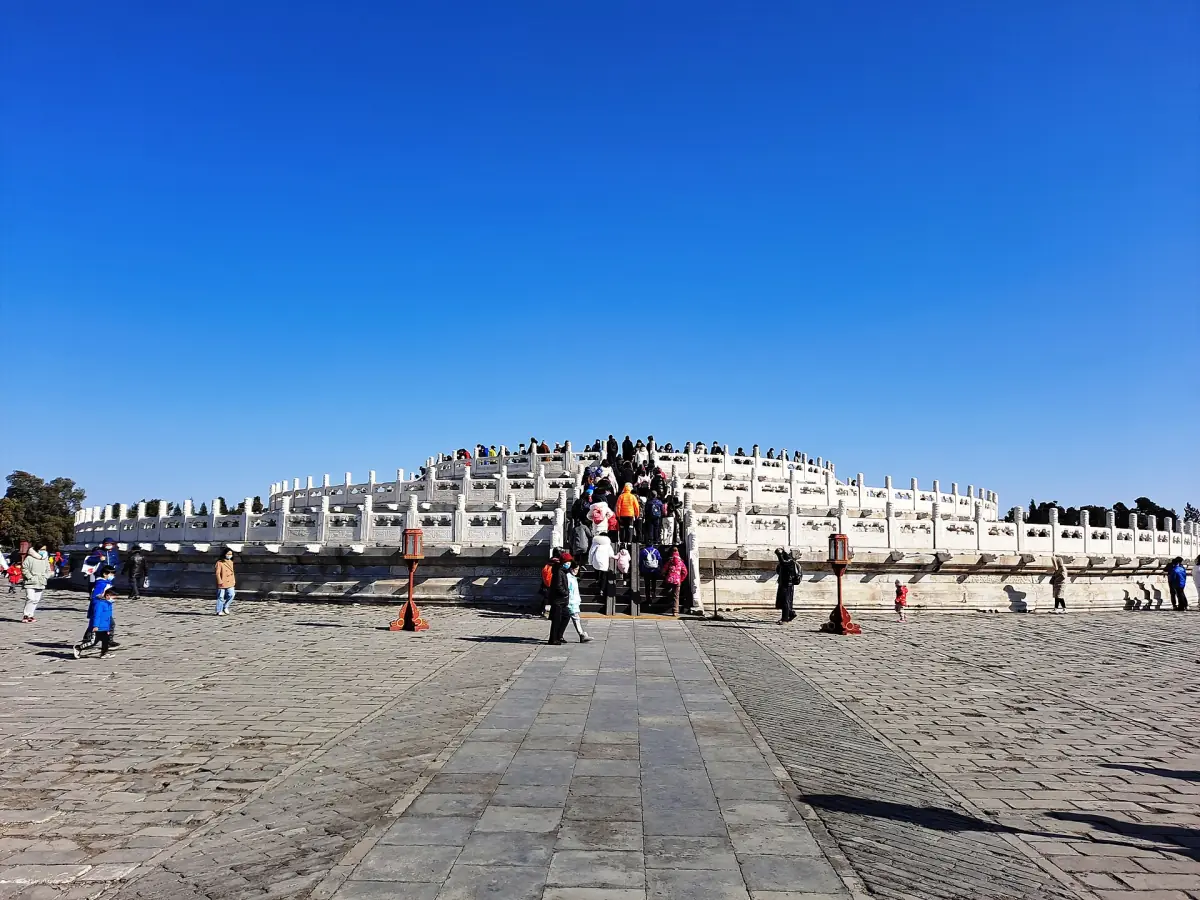
Circular Mound Altar
Nine rings and the Heart Stone.
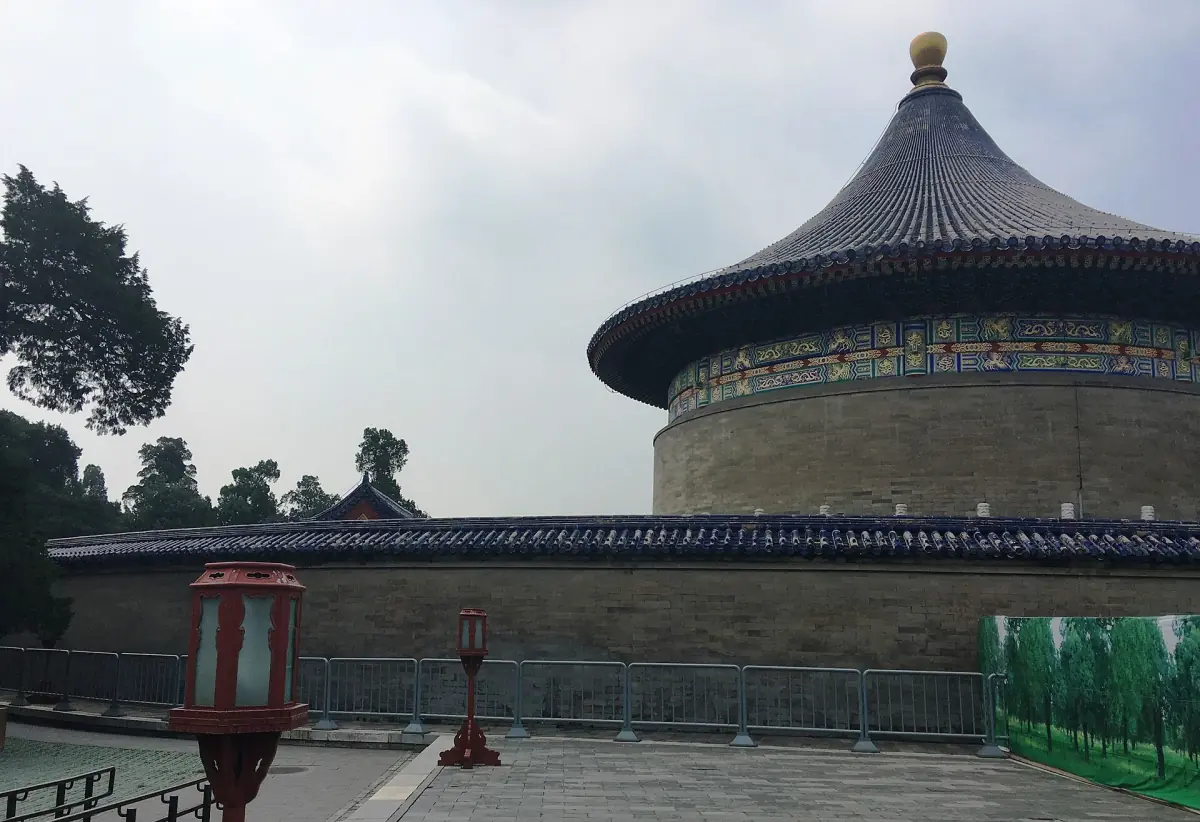
Echo Wall and Imperial Vault
The circular wall and the Triple Sound Stones.
The story behind the buildings is on the history page.
Temple of Heaven architecture: frequently asked questions
Why is the roof of the Hall of Prayer blue?
Blue stands for the sky, and the hall's round shape and blue tiles symbolize heaven. Earlier the three roofs were blue, yellow and green from top to bottom. Since 1751 the tiles have been uniformly blue.
How tall is the Hall of Prayer?
About 38 m in total, and about 24 m between the outer eave columns. The height depends on where it is measured, so use the figures as rough values.
What does the number nine mean at the Temple of Heaven?
Nine is the number of heaven. Steps, paving stones and balustrades at the Circular Mound Altar repeat nine and its multiples, and the top terrace has rings of 9 to 81 stones.
Is the Temple of Heaven a Buddhist temple?
No. It was an imperial altar for heaven rites and harvest prayers, shaped by Confucian ritual and music culture and ideas of yin and yang and the five elements.
Does the Echo Wall always work?
Not reliably. Crowds, noise and where you stand all change the result. The wall is the circular enclosure of the Imperial Vault courtyard, and its smooth, tight bricks and curve help sound travel along the inside.